

Chicago – May 24, 2026
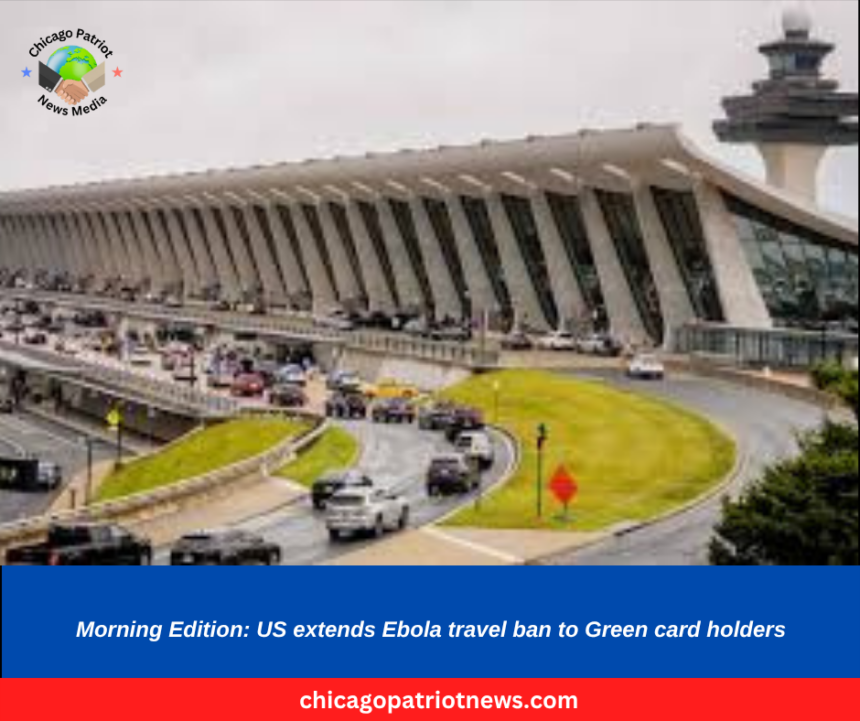
The United States has temporarily expanded its Ebola-related travel restrictions to include lawful permanent residents (green card holders) who recently traveled to the Democratic Republic of the Congo, Uganda, or South Sudan. Previously, the restrictions applied mainly to non-U.S. travelers, while U.S. citizens and green card holders were exempt.
According to the Centers for Disease Control and Prevention (CDC), the expanded measure is intended to prevent the spread of the rare Bundibugyo strain of Ebola into the U.S. and to manage emergency public health resources. The order was issued under Title 42 public health authority and is currently set as a temporary 30-day restriction.
The decision follows a worsening Ebola outbreak in Central and East Africa. The World Health Organization recently raised the outbreak risk level to “very high” and declared it an international health emergency. Reports indicate dozens of confirmed cases and significant disruption to healthcare operations in affected regions.
The policy has sparked criticism from some public health and legal experts, who argue that broad travel bans may discourage international medical volunteers and interfere with humanitarian efforts. Others question whether restricting green card holders — who normally have strong legal protections for U.S. entry — sets a significant new precedent in immigration and public health policy.