

Chicago – August 06, 2026
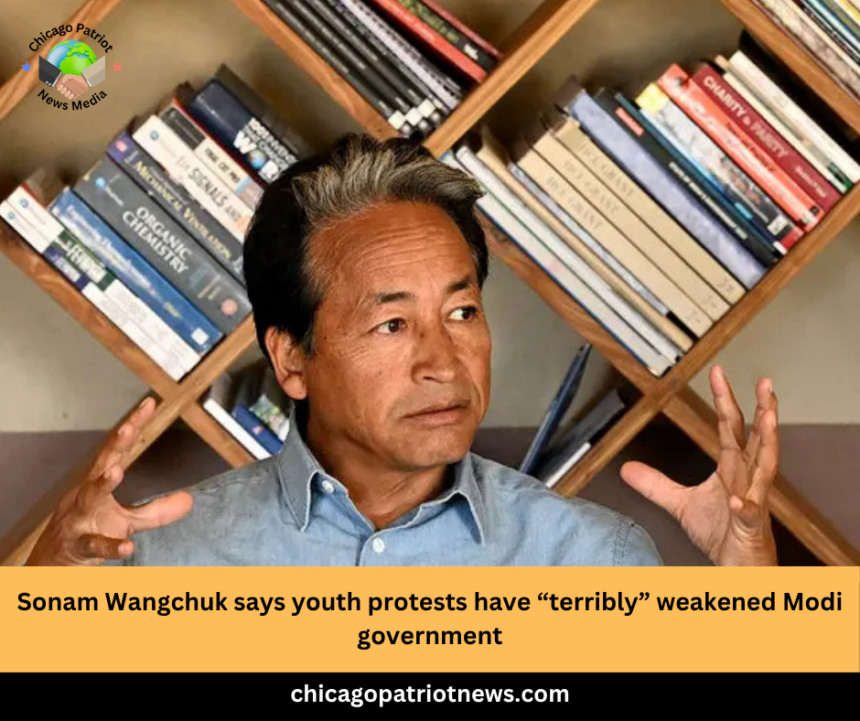
“Youth protests have weakened Narendra Modi terribly,” activist Sonam Wangchuk told the BBC, describing the impact of India’s movement.
Wangchuk’s assessment followed a 26-day hunger strike in Delhi, where he fasted on salt and water to support demonstrators demanding accountability over examination paper leaks. Protesters sought the resignation of Education Minister Dharmendra Pradhan, arguing that failures in India’s testing system have placed students’ futures at risk.
The 59-year-old educator joined the campaign on June 28 at Jantar Mantar. His health deteriorated, and he was moved to hospital. He ended the strike after receiving assurances, saying he feared a crackdown and wanted to protect students. Pradhan resigned on July 25, a setback for Modi’s administration.
Wangchuk said the protests had changed the mood. Young Indians, he argued, no longer believe they must accept decisions passively; they have gained confidence that action can produce results.
The movement, sparked by exam anger and amplified online, has done more than force a minister’s exit. In Wangchuk’s view, it has punctured Modi’s aura of invincibility and shown his government that India’s youth can impose pressure.