

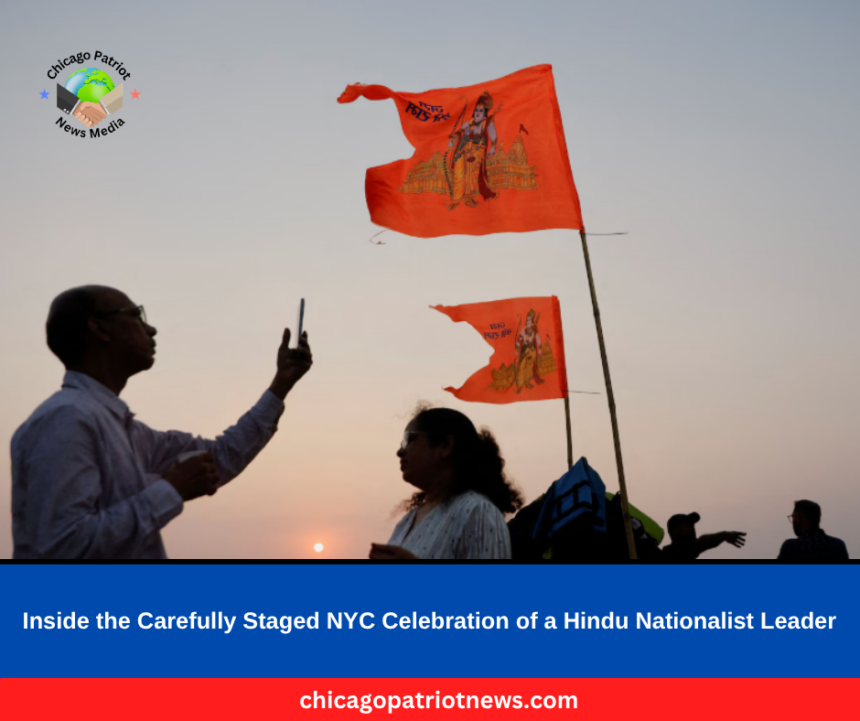
Chicago – September 02, 2026
A major gathering at New York City’s Madison Square Garden brought international attention to Mohan Bhagwat, the chief of the Rashtriya Swayamsevak Sangh (RSS), a powerful Hindu nationalist organization in India. The event, presented as a celebration of “universal oneness,” combined cultural performances, religious symbolism and messages of unity.
The carefully organized program sought to portray Bhagwat and the RSS as representatives of Indian culture, social service and interfaith harmony. Attendees included members of the Indian diaspora as well as representatives from different religious communities. The event featured traditional performances and references to India’s history, while speakers emphasized peace, unity and cooperation among faiths.
However, the celebration also generated controversy. Critics argue that the inclusive presentation of the event contrasts with the RSS’s Hindu nationalist ideology and its long-standing influence on Indian politics and society. The organization has faced criticism from opponents who accuse it of promoting an exclusionary vision of Indian identity. Supporters, meanwhile, describe the RSS as a cultural and social organization committed to serving Indian society.
The event’s staging in New York was significant because it demonstrated the growing international reach of India’s Hindu nationalist movement and its efforts to engage members of the Indian diaspora. By bringing religious leaders and cultural figures together, organizers appeared to emphasize a message of harmony while highlighting India’s civilizational and Hindu heritage.
For supporters, the celebration represented Indian culture and the idea of global unity. For critics, it raised questions about whether an interfaith setting can separate the image presented abroad from the political and ideological debates surrounding the RSS in India.
Ultimately, the New York gathering was more than a cultural celebration. It became a highly visible example of how political movements can use carefully choreographed public events to shape their international image, build connections with diaspora communities and frame contentious ideologies through the language of unity and cultural pride.