

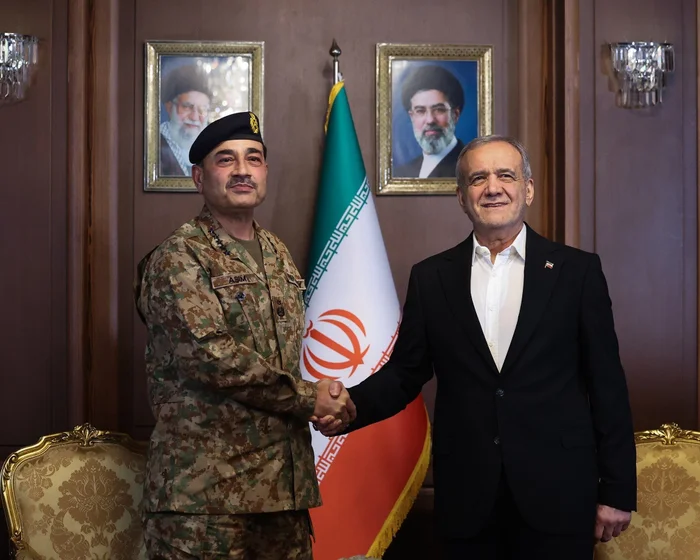
Chicago – April 18, 2026
Pakistan’s Chief of Army Staff, General Asim Munir, has engaged in high-level talks in Iran amid rising regional tensions, with the visit widely seen as part of Islamabad’s broader effort to promote de-escalation and protect its strategic interests in a volatile Middle East.
Core Agenda of the Talks
The discussions in Tehran have reportedly revolved around several key areas:
1. Regional De-escalation
A central focus has been reducing tensions linked to the ongoing Iran-related conflicts in the region, particularly in light of recent U.S. and Israeli military actions. Pakistan has positioned itself as a country advocating restraint, urging all sides to avoid further escalation that could destabilize neighboring regions.
2. Border Security Cooperation
Pakistan and Iran share a sensitive border that has seen periodic militant activity. Strengthening intelligence sharing, coordinated patrols, and mechanisms to curb cross-border militancy were high on the agenda.
3. Protection of Economic Interests
Both countries discussed safeguarding trade routes and regional connectivity projects. Stability in Iran is crucial for Pakistan’s economic plans, including energy cooperation and border trade.
4. Diplomatic Coordination
General Munir’s visit also aimed to align positions on broader geopolitical developments, including the role of external powers in the region and the impact of conflict on Muslim-majority countries.
What Has Been Achieved So Far
While no dramatic breakthrough has been publicly घोषित, several incremental outcomes are evident:
- Commitment to Dialogue: Both sides have reaffirmed their intent to resolve issues through diplomatic channels rather than confrontation.
- Enhanced Security Coordination: Initial understandings on improving border management and intelligence cooperation have been reached.
- Unified Call for Restraint: Pakistan and Iran appear aligned in calling for de-escalation in the wider conflict environment.
- Strengthened Bilateral Ties: The visit itself signals continued military-to-military engagement, which remains a key pillar of Pakistan-Iran relations.
Strategic Significance
General Munir’s visit underscores Pakistan’s attempt to balance its relationships—maintaining ties with Western allies while also engaging regional powers like Iran. It reflects Islamabad’s concern that prolonged instability could spill over into its own territory, economically and security-wise.