

Chicago – December 03, 2025
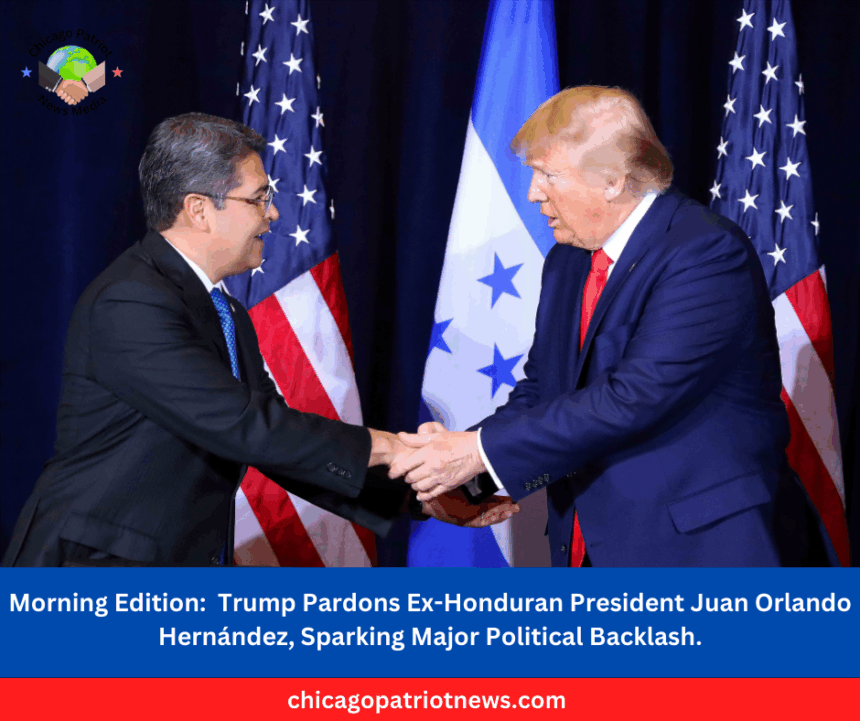
Former Honduran President Juan Orlando Hernández, convicted in one of the largest U.S.-prosecuted drug trafficking conspiracies, has been officially pardoned by President Donald Trump. A White House official, speaking anonymously, confirmed the pardon, and the Federal Bureau of Prisons verified Hernández’s release on Monday.
Hernández, who led Honduras for two presidential terms, had been serving a 45-year sentence for plotting to import massive quantities of cocaine into the United States. His unexpected release has triggered fierce criticism, with many accusing the Trump administration of hypocrisy particularly as it intensifies its campaign against drug trafficking networks linked to Venezuela.
Lawmakers and analysts argue the decision undermines the administration’s tough-on-drugs stance. Senator Tim Kaine, the ranking Democrat on the Senate Foreign Relations Subcommittee for the Western Hemisphere, called the move “shocking.” Kaine said, “Hernández led one of the largest criminal operations ever convicted in U.S. courts. Less than a year into his sentence, President Trump is pardoning him. It suggests Trump has no real commitment to combating narcotrafficking.”
During Trump’s first term, his administration maintained a cooperative relationship with Hernández especially after Honduras moved its embassy in Israel from Tel Aviv to Jerusalem, aligning with Trump’s foreign policy positions. Recently, Trump criticized Hernández’s prosecution, claiming respected sources told him the former president had been “treated harshly and unfairly.”
One influential voice behind the pardon appears to be longtime Trump adviser Roger Stone, who publicly advocated for Hernández’s release. On his radio program, Stone revealed he delivered a four-page letter from Hernández alleging he was a victim of wrongful conviction and politically motivated “lawfare” by the Biden-Harris administration.
With the pardon now official, the decision is expected to intensify political debate over the administration’s priorities and raise new questions about its handling of international drug trafficking cases.