

Chicago – August 07, 2025
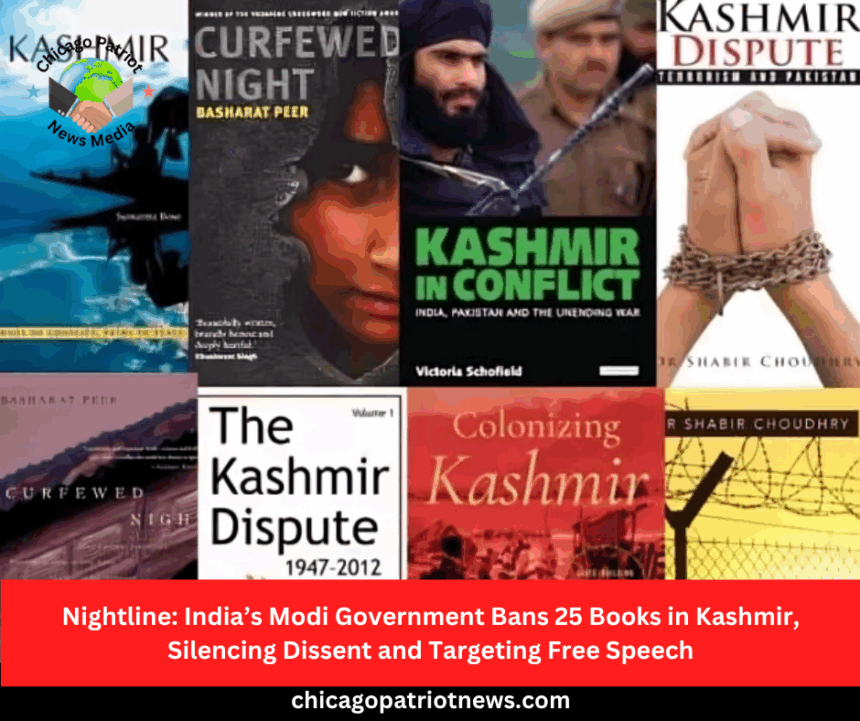
In a controversial move, Indian authorities have banned 25 books in Kashmir, claiming they promote “false narratives” and “secessionism” in the region. These books, written by prominent figures like Booker Prize-winning author Arundhati Roy, constitutional expert A.G. Noorani, and respected historians Sumantra Bose, Christopher Snedden, and Victoria Schofield, are now deemed illegal under a recent law. The ban comes as part of a wider crackdown on free expression in Kashmir, where the media and voices of dissent have faced increasing restrictions.
The order, issued by the Home Department under the control of Lt. Gov. Manoj Sinha, represents a deeper push by the ruling Bharatiya Janata Party (BJP) and its allies, including the Rashtriya Swayamsevak Sangh (RSS), to suppress any criticism of their policies.
With the support of these groups, Prime Minister Narendra Modi’s government has escalated its control over the region since stripping Kashmir of its special status in 2019. This latest move marks a dangerous step toward silencing critical voices, as these books are now labeled “forfeit,” meaning possessing or selling them can lead to severe penalties, including prison sentences.
The BJP’s heavy-handed approach has sparked alarm among human rights defenders, who warn that this kind of censorship is not only an attack on intellectual freedom but also a violation of Kashmiris’ right to access diverse perspectives.
The situation in Kashmir has become increasingly dire, with a government appointed by New Delhi ruling over the region, while the local elected officials hold little power. Despite this, the crackdown on literature and free speech continues to intensify under Modi’s authoritarian vision.
Kashmiris, who have long faced oppression, are now caught in a web of repression, where the mere possession of these banned works could lead to years behind bars. The book ban is yet another step in the BJP and RSS’s agenda to erase the region’s unique identity, stifling the very voices that have sought to shed light on the complex history and political realities of Kashmir.