

Chicago – June 10, 2025
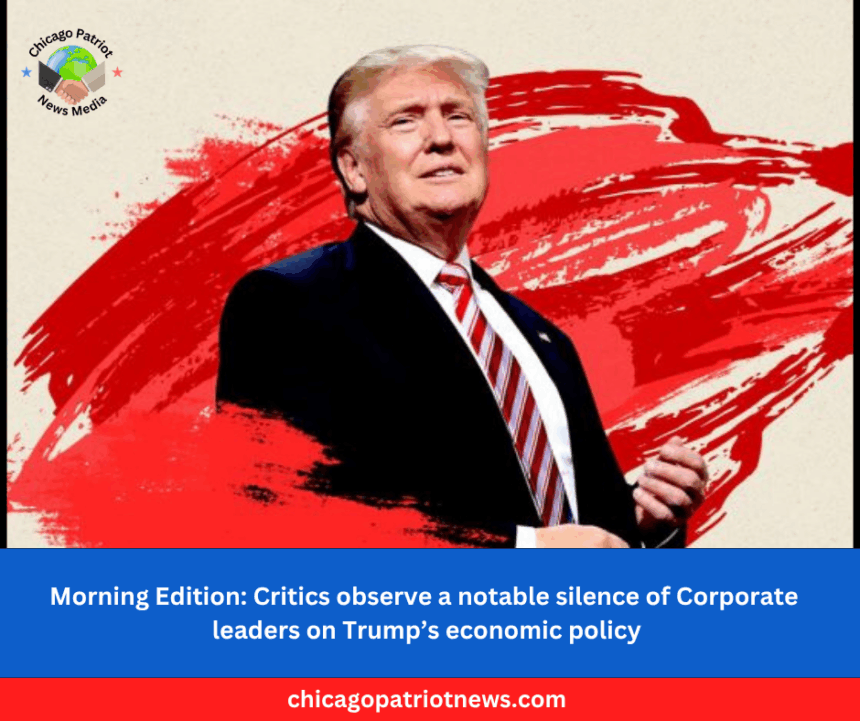
In recent discussions on U.S. economic policy, analysts have observed a notable silence from corporate leaders regarding the financial policies associated with former President Donald Trump. Commentators have pointed out that while Trump’s administration enacted significant changes—such as tax cuts for corporations, tariffs on international trade, and deregulation—most of America’s top CEOs refrained from publicly commenting on the long-term consequences of these measures.
This silence stands in contrast to the visible involvement of business leaders in past policy debates, particularly during eras of major economic shifts. Historically, corporate executives have weighed in on issues affecting fiscal stability, trade policy, and regulation, offering perspectives on how these decisions might influence economic competitiveness, labor markets, and national debt.
Observers suggest multiple reasons for this current reluctance. Some propose that CEOs may fear political retaliation or market volatility resulting from public opposition to presidential policies. Others note the alignment of corporate tax interests with Trump’s economic agenda, reducing incentives for dissent.
Critics argue that by avoiding public discussion, corporate America missed an opportunity to contribute to important national conversations about income inequality, trade relations, and fiscal responsibility. Supporters of the administration’s policies, however, contend that the financial measures stimulated economic growth and bolstered market confidence during Trump’s term.
The debate highlights broader questions about the role of corporate leadership in public policy discourse. Whether this pattern continues in future administrations remains a subject of interest for economists, policymakers, and business analysts alike.