

Chicago – September 22, 2025
India’s democratic journey has witnessed the rise of many leaders from diverse communities, including several prominent Muslim politicians who held the position of Chief Minister in different states and union territories. Their leadership not only addressed regional issues but also reflected the inclusivity embedded in the Indian Constitution, where secularism and representation have remained core values.
Prominent Names Across States
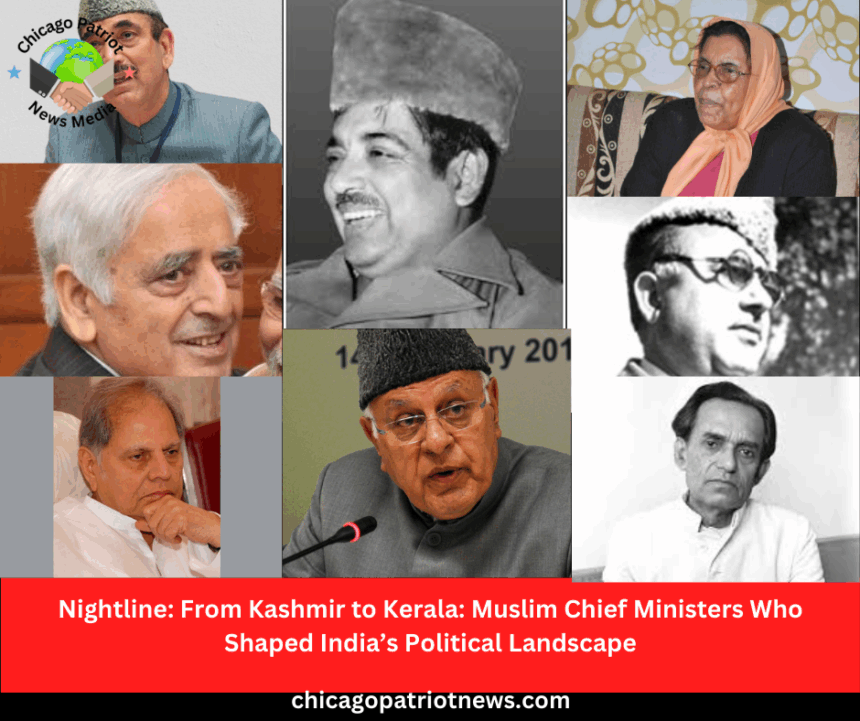
Farooq Abdullah, one of the most recognized leaders from Jammu and Kashmir, served as Chief Minister three times and has been a key voice in regional as well as national politics.
The state also saw leaders such as Ghulam Muhammad Sadiq, Ghulam Nabi Azad, and Mufti Muhammad Sayeed take charge at crucial times, each contributing to the political and social discourse of the region.
In southern and eastern India, Muslim leaders also made history. Muhammad Hasan Farook served three terms as Chief Minister of Puducherry, while C.H. Mohammad Koya became the Chief Minister of Kerala, leaving an enduring legacy in education.
A.R. Antulay also made history as the state’s first Muslim Chief Minister of Maharashtra. Bihar saw Abdul Ghafoor in its highest position, while Assam made history with Syeda Anwara Taimur, the first and only Muslim woman to lead an Indian state.
Diversity in Leadership
These leaders exemplify the pluralism of Indian democracy. Their tenures highlight not only their personal achievements but also the opportunities Indian politics provides for diverse communities to shape governance. From Kashmir to Kerala, their contributions underscore the importance of representation in strengthening India’s unity in diversity.