
Chicago – April 06, 2026
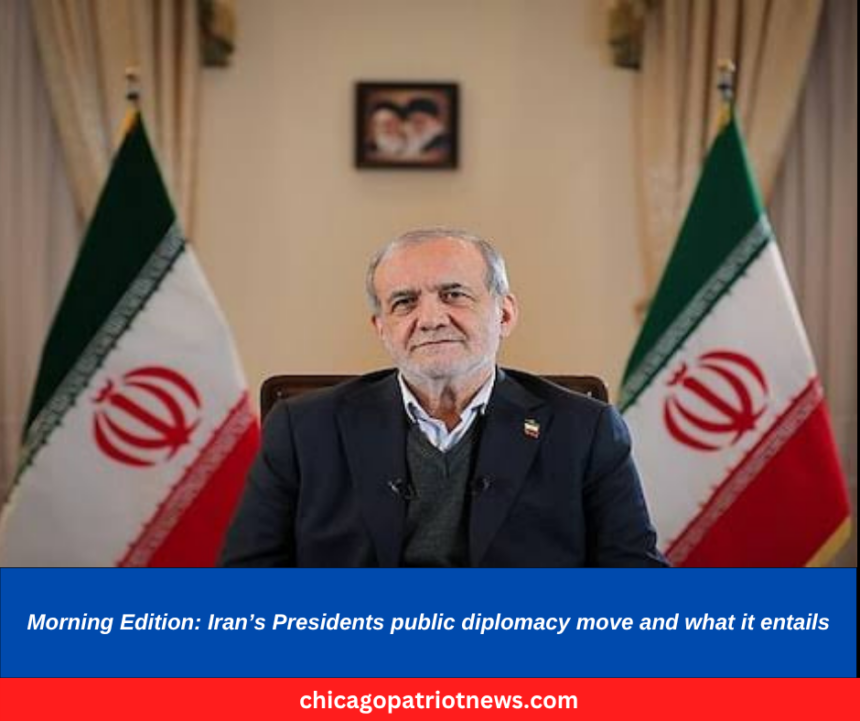
The open letter released by Iran’s president (April 2) is primarily a public diplomacy move—aimed not at the U.S. government, but directly at ordinary Americans. Its purpose is to shape public opinion, reduce hostility, and present Iran’s position in a more human and political light.
Gist of the letter:
- Distinguishing people from government:
He emphasizes that Iran does not see the American public as its enemy, blaming tensions instead on U.S. policies and leadership decisions and blind Israeli partnership. He openly states that Iran has no issues with America and no hostility then why Americans are paying their tax dollars to fund Israel war against Iran. - Criticism of U.S. actions:
The letter condemns sanctions, military pressure, and involvement in Middle Eastern conflicts, arguing these harm civilians and increase instability. He calls upon the people of US saying that they support Israel through funding and weapons sales which Israel uses for starting wars against innocent common people of Gaza, Iran and Lebanon. Why do they remain silent on these atrocities and are fooled by their presidents. - Call for peace and diplomacy:
It urges Americans to support dialogue over war, suggesting that diplomacy—not confrontation—is the only sustainable path. He urges the US public to raise their voices for truth and to seek accountability from the government on why their tax money is being used on funding Israel when there is no benefit for the US in sight. - Highlighting shared humanity:
The president stresses common values—family, security, dignity—to build empathy between Iranians and Americans. - Appeal to public influence:
A key message is that American citizens have the power (through public opinion and democracy) to push their leaders toward less aggressive policies. He appeals that why Americans are fighting for Israel as their proxy when we have no rift between us. His letter is aimed at urging Americans to think deeply and raise their voices to bring a positive change within their country and worldwide.
Overall purpose:
It’s a strategic attempt to bypass official channels and influence U.S. public sentiment, portraying Iran as open to peace while framing U.S. policy as the main driver of conflict.