

Chicago – August 14, 2026
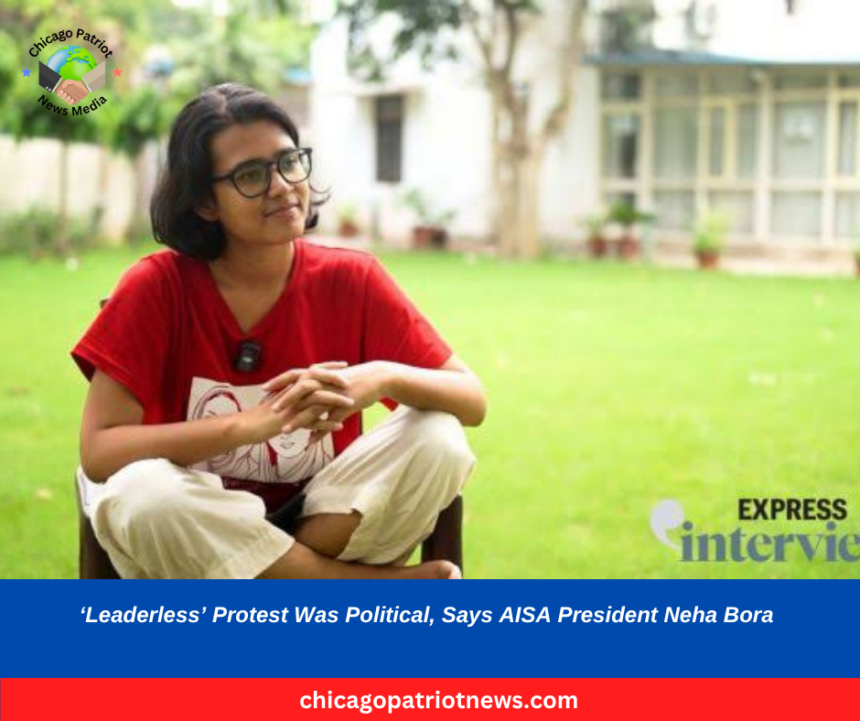
All India Students’ Association (AISA) president and JNU PhD scholar Neha Bora, who emerged as one of the prominent faces of the recent Jantar Mantar student protests, has described the movement as a political expression of anger over unemployment, examination irregularities and the deterioration of education.
In an interview with The Indian Express, Bora rejected the description of the protests as entirely “leaderless” or apolitical. She argued that people taking to the streets around common demands represented a political position in itself. According to her, the movement brought together young people frustrated by issues including paper leaks, unemployment and what she described as the declining quality of education.
Bora also defended the role of Left student organisations in the agitation. She said AISA and other groups had been campaigning for years on education, examination reforms and student rights, making their participation in the Jantar Mantar protests a continuation of existing activism rather than a sudden revival of the Left.
‘Azadi’ as a feminist slogan
Addressing criticism surrounding slogans such as “Azadi”, Bora said the slogan should be understood in the context of demands for freedom from unemployment, corruption, paper leaks and patriarchal restrictions. She particularly described it as carrying a message of women’s autonomy and freedom.
On CJP and wider political participation
Bora also spoke about AISA’s engagement with the Cockroach Janta Party (CJP), saying the organisation was willing to work with groups when their activities served the interests of students and young people. She maintained that the central objective remained protecting the rights of youth and students.
On the future of Left politics, Bora argued that parliamentary politics can be used as a platform to amplify the voices of marginalised and underrepresented communities, while grassroots movements remain central to political organising.
Her comments underline the broader political debate emerging from the Jantar Mantar protests: whether the mobilisation represents a temporary student uprising or the beginning of a longer-term challenge to India’s political establishment.