

Chicago – February 25, 2026
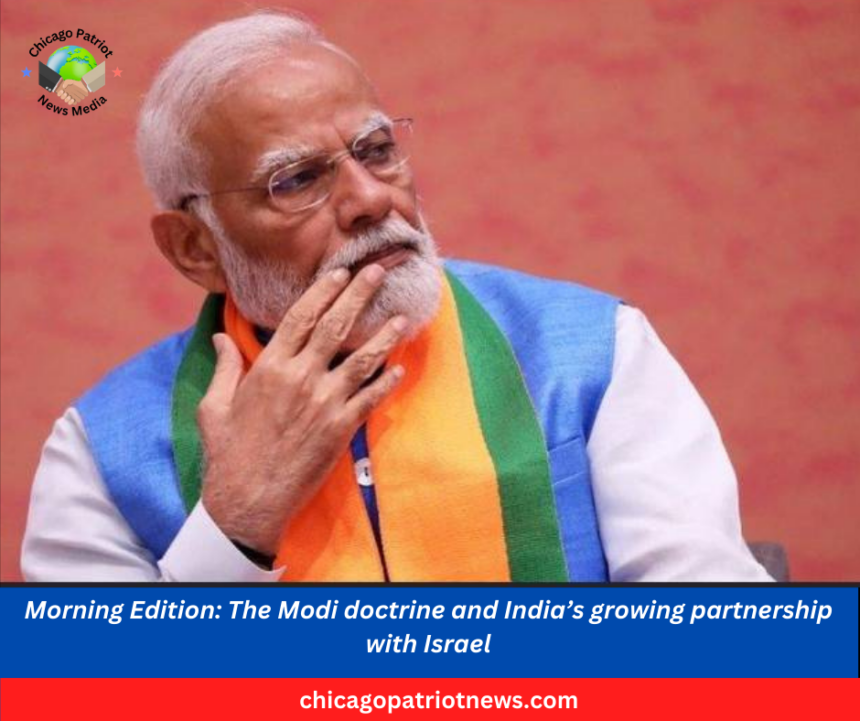
In recent years, India’s foreign policy has undergone a visible transformation, often described as the “Modi Doctrine,” reflecting the strategic vision of Prime Minister Narendra Modi. Central to this doctrine is a more assertive, interest-driven diplomacy that prioritizes national security, economic growth, and global stature over ideological hesitation. One of the clearest manifestations of this shift has been India’s deepening partnership with Israel.
Understanding the Modi Doctrine
While not codified as an official document, the Modi Doctrine broadly emphasizes:
- Strategic Autonomy with Assertiveness – Moving beyond non-alignment toward multi-alignment, engaging major powers simultaneously.
- Neighborhood First – Prioritizing South Asia while countering regional security threats.
- Security-Centric Diplomacy – Recognizing terrorism and border threats as central foreign policy concerns.
- Economic Diplomacy – Leveraging foreign partnerships for investment, technology, and trade.
- Diaspora and Global Image – Actively engaging the Indian diaspora and projecting India as a rising power.
Within this framework, relations with Israel have evolved from cautious cooperation to open strategic partnership.