

Chicago – May 11, 2026
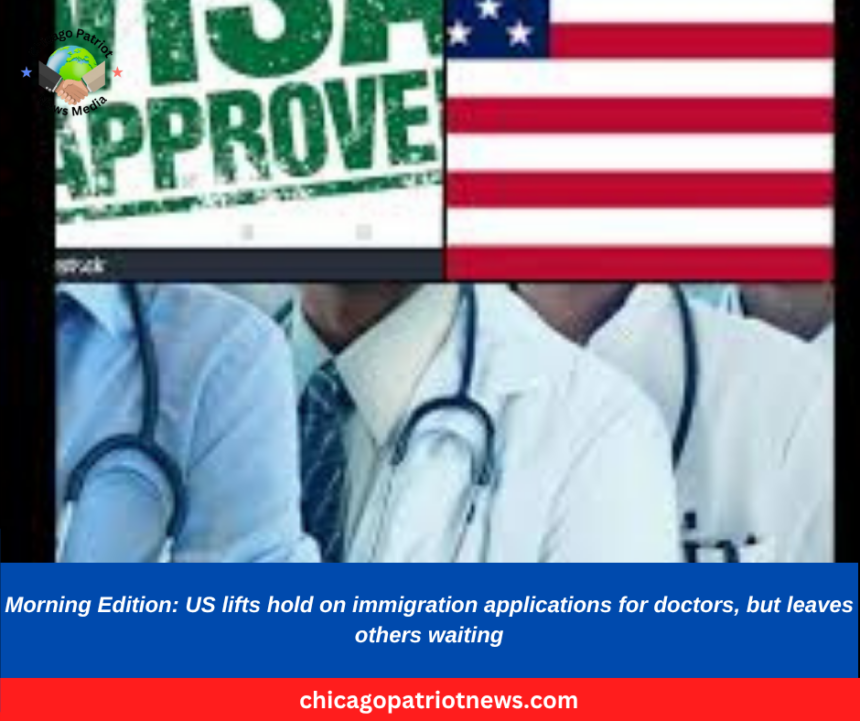
The U.S. government has quietly resumed processing some immigration and green card applications for foreign doctors after months of delays, offering relief to physicians working in underserved American communities. The exemption applies to doctors from countries previously flagged as “high-risk” under stricter immigration screening policies.
The policy change comes amid growing concerns over physician shortages, especially in rural areas where many foreign-trained doctors provide essential care. Libyan pulmonologist Dr. Faysal Alghoula, who treats around 1,000 patients across Indiana, Illinois, and Kentucky, is among those who may benefit from the move.
However, the exemption does not extend to thousands of other immigrants, including researchers, scientists, entrepreneurs, and skilled workers from countries such as Iran, Afghanistan, and Venezuela. Many remain stuck in legal limbo, unable to work, renew documents, travel, or access basic services while their applications remain frozen.
Immigration lawyers and advocacy groups say the partial rollback highlights inconsistencies in the administration’s immigration policy. Critics argue the delays have disrupted careers, separated families, and created uncertainty for legally residing immigrants. Some affected applicants have filed lawsuits demanding action on long-pending cases.
Although doctors are now allowed to have their cases reviewed again, approvals are not guaranteed, and many still fear detentions, denials, or further delays during interviews with immigration authorities.
Chicago – May 11, 2026
The U.S. government has quietly resumed processing some immigration and green card applications for foreign doctors after months of delays, offering relief to physicians working in underserved American communities. The exemption applies to doctors from countries previously flagged as “high-risk” under stricter immigration screening policies.
The policy change comes amid growing concerns over physician shortages, especially in rural areas where many foreign-trained doctors provide essential care. Libyan pulmonologist Dr. Faysal Alghoula, who treats around 1,000 patients across Indiana, Illinois, and Kentucky, is among those who may benefit from the move.
However, the exemption does not extend to thousands of other immigrants, including researchers, scientists, entrepreneurs, and skilled workers from countries such as Iran, Afghanistan, and Venezuela. Many remain stuck in legal limbo, unable to work, renew documents, travel, or access basic services while their applications remain frozen.
Immigration lawyers and advocacy groups say the partial rollback highlights inconsistencies in the administration’s immigration policy. Critics argue the delays have disrupted careers, separated families, and created uncertainty for legally residing immigrants. Some affected applicants have filed lawsuits demanding action on long-pending cases.
Although doctors are now allowed to have their cases reviewed again, approvals are not guaranteed, and many still fear detentions, denials, or further delays during interviews with immigration authorities.