

Chicago – September 28, 2025
Iran was hit with so-called snapback sanctions on Sunday local time, at a time of high tension in the Middle East. But what does that mean?
The term is used for the reimposition of United Nations sanctions against Iran a decade after they were suspended as part of a landmark deal to limit and monitor the country’s controversial nuclear program.
France, Germany and the United Kingdom said they had “no choice” but to trigger the snapback, accusing Iran of not meeting its obligations under the agreement. But the reversion could mean Tehran moves even further from international oversight of its nuclear program.
Sanctions were due to end permanently on October 18. But the original agreement, known as the JCPOA, which saw the lifting of sanctions against Iran in exchange for restrictions over its nuclear program, allowed any signatory to restore sanctions before that date if it decided Iran had failed to meet its commitments.
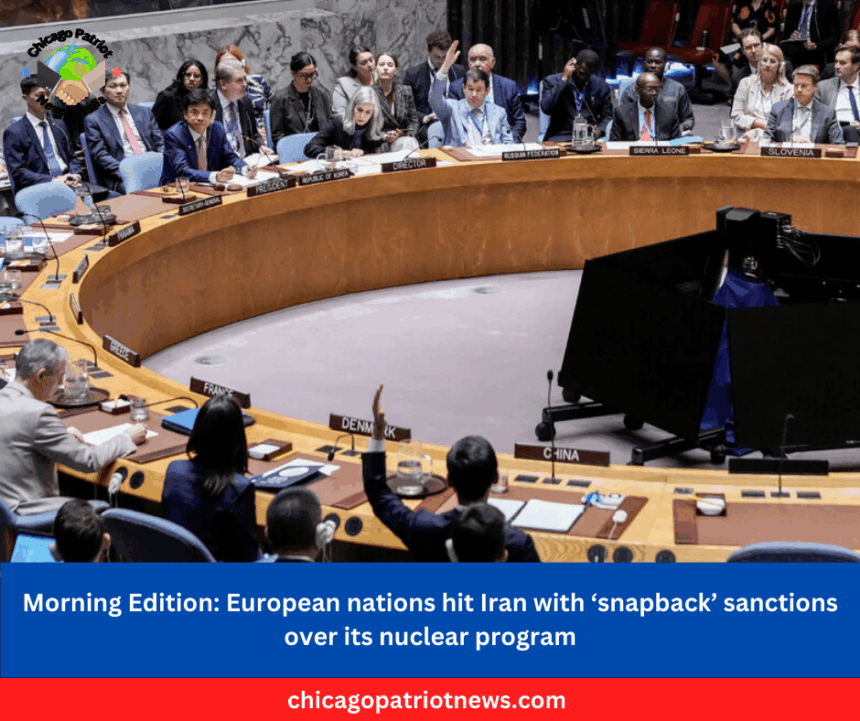
In August, European negotiators told the UN Security Council that Iran had violated “the near entirety of its JCPOA commitments,” and that Europe was preparing to trigger the snapback mechanism. It gave a month’s warning to Iran in August as a way of getting the process moving before Russia assumes the presidency of the Security Council in October.
Several meetings and calls took place this month with Iranian foreign minister Abbas Araghchi and other Iranian officials – but none made headway in meeting the Europeans’ key demands: evidence that Iran is prepared to find a diplomatic solution, comply with monitoring and inspections by the International Atomic Energy Agency (IAEA) and account for the state and whereabouts of more than 400 kg of highly enriched uranium.