

Chicago – June 09, 2026
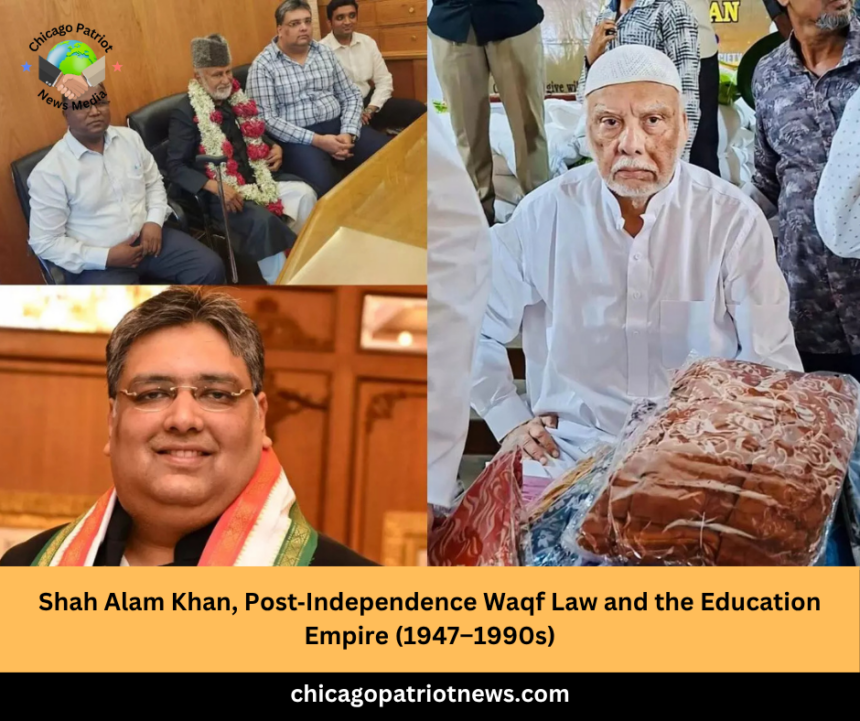
Born in 1921 into a jagirdar family, Nawab Shah Alam Khan came of age as British rule and the princely state system were collapsing. After the death of his industrialist father‑in‑law, he gradually took charge of the Hyderabad Deccan Cigarette Factory, keeping the Golconda brand alive through the upheavals of independence in 1947 and the political integration of Hyderabad soon afterward.
At the same time, the newly independent Indian state turned to waqf reform. Parliament enacted the Waqf Act, 1954 (Act 29 of 1954) to provide “better administration and supervision of wakfs,” centralizing oversight in state‑level boards and, later, a Central Waqf Council set up in 1964. Subsequent legislation, including the Waqf Act, 1995, sought to modernize surveys, registration and protection of waqf properties across India.
A 2025 government note put the portfolio at roughly 8.72 lakh waqf properties over more than 38 lakh acres, making it one of the largest charitable land systems in the world.
In Hyderabad, Shah Alam Khan moved from being just an industrialist to becoming a major educationist and minority community figure. As chairman of the Anwar‑ul‑Uloom Educational Society and other bodies, he helped expand a small school into a network of colleges and professional institutions that educated tens of thousands of students.
Obituaries in 2017, the year of his death at age 96, remembered him as a philanthropist, cultural patron and “embodiment” of Hyderabadi tehzeeb, while noting his roles on minority finance bodies and university councils.