

Chicago – June 19, 2026
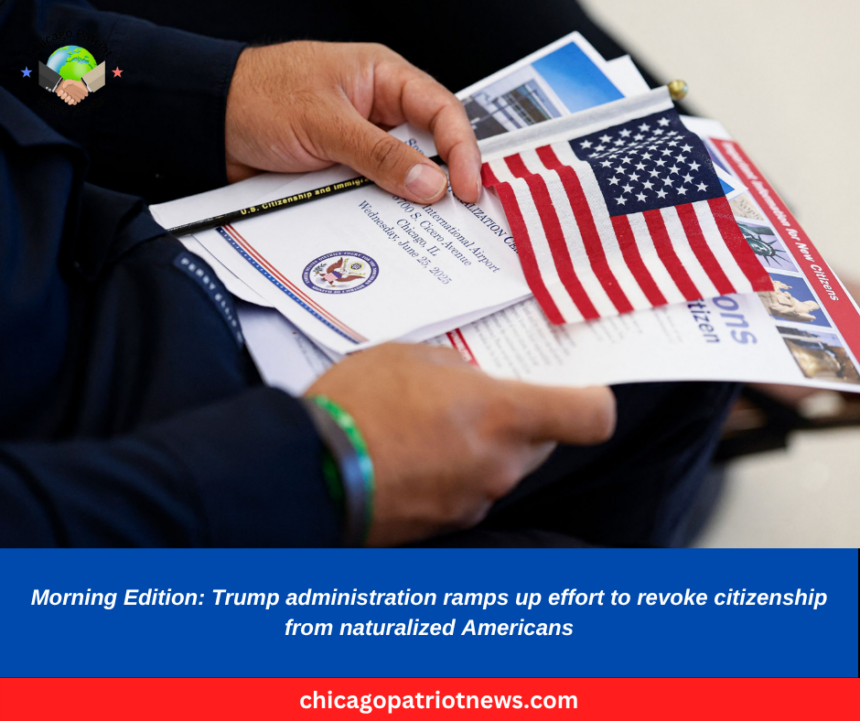
The Trump administration has intensified efforts to pursue denaturalization cases, a legal process through which U.S. citizenship can be revoked from naturalized Americans who are found to have obtained citizenship through fraud, misrepresentation, or the concealment of material facts.
Justice Department officials say the initiative is focused on individuals who may have provided false information during the immigration or naturalization process. Supporters of the policy argue that enforcing existing laws helps protect the integrity of the U.S. immigration system and ensures that citizenship is granted only to those who meet all legal requirements.
The expanded effort has drawn criticism from immigrant advocacy groups and civil rights organizations, which warn that increased denaturalization actions could create uncertainty among millions of naturalized citizens. Critics argue that aggressive enforcement may discourage eligible immigrants from pursuing citizenship and raise concerns about due process protections.
Legal experts note that denaturalization cases remain relatively rare and typically require the government to prove that citizenship was obtained unlawfully. Federal courts ultimately decide whether citizenship should be revoked.
The issue is expected to remain a subject of political and legal debate as the administration continues to emphasize immigration enforcement and border security as key policy priorities.