

Chicago – April 26, 2026
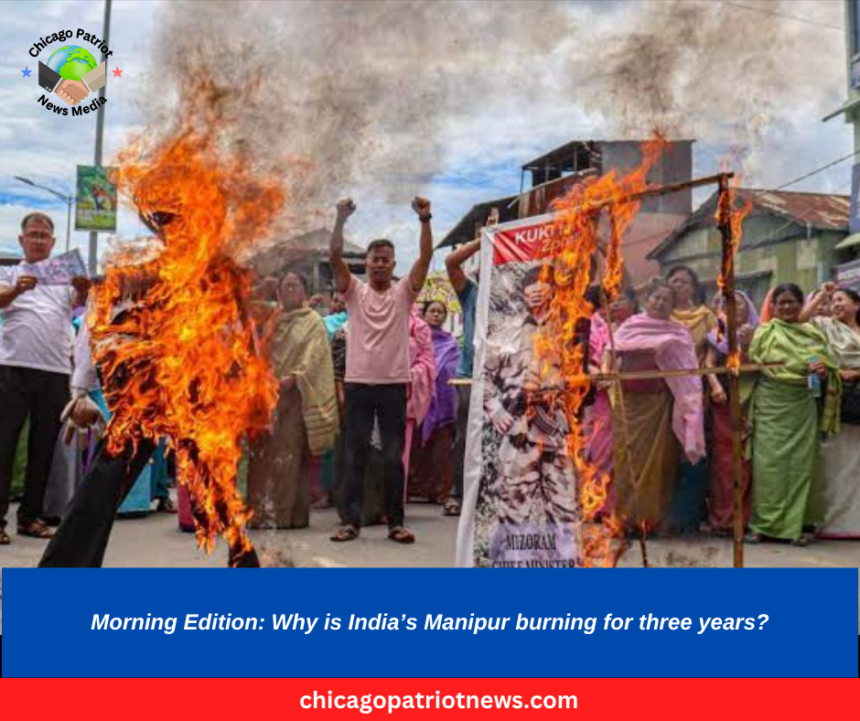
Manipur, a northeastern Indian state, has been gripped by recurring violence since May 2023, and the crisis continues to simmer three years on due to deep-rooted ethnic, political, and security tensions.
The conflict largely centers on clashes between the Meitei community, which dominates the Imphal Valley, and the Kuki-Zo tribal groups inhabiting the surrounding hill districts. Tensions escalated after a court-backed demand to grant Scheduled Tribe (ST) status to Meiteis, which tribal groups fear would threaten their land rights and political protections.
What began as protests quickly spiraled into widespread violence, with villages burned, thousands displaced, and hundreds killed. Armed groups and local militias have since entrenched divisions, while allegations of bias against state authorities have deepened mistrust among communities.
The crisis has been further aggravated by the slow and often criticized response of both the state and central governments. Internet shutdowns, limited media access, and sporadic security crackdowns have failed to restore lasting peace. Humanitarian conditions remain dire, with many families still living in relief camps.
Manipur’s unrest persists because it is not just a law-and-order issue, but a complex struggle over identity, land, and political power. Without meaningful dialogue, impartial governance, and long-term reconciliation efforts, the state risks remaining trapped in a cycle of violence.