

Chicago – June 05, 2026
Iran’s history is defined by its strategic control over critical maritime passages, particularly the Strait of Hormuz, a waterway deeply woven into the nation’s civilizational identity.
The Achaemenid Empire, founded by Cyrus the Great in 550 BC, was the first imperial power to recognize the Strait of Hormuz as a strategic artery to be owned. During the Sassanian era (224-651 CE), Zoroastrian rulers dominated both shores of the strait, securing control over lucrative maritime trade routes linking Mesopotamia and the Indian subcontinent.
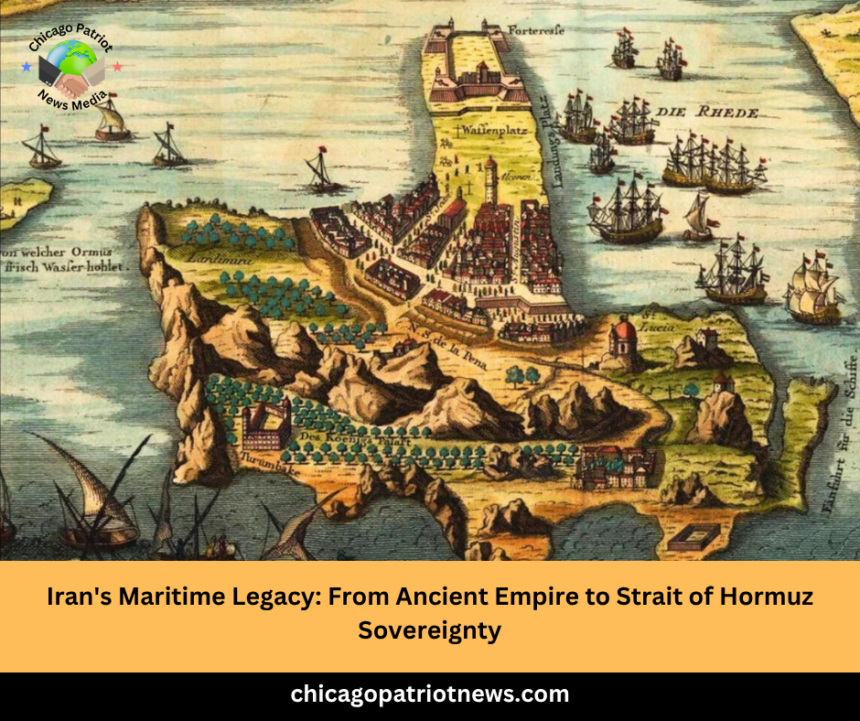
The modern story of the strait began with the Portuguese maritime empire. In the early 1500s, they captured the Strait of Hormuz, establishing control over major chokepoints for more than a century. However, in 1622, Persians under Shah Abbas I broke that control, expelling the Portuguese from Hormuz Island with British East India Company naval assistance.
This victory remains pivotal in Iran’s civilizational memory—it represents the first time Iran defeated a European empire at this exact chokepoint. The event is commemorated annually as Persian Gulf National Day on April 30, marking the restoration of sovereignty over southern waters.
From the British Navy’s dominance until World War II to American control afterward, global sea routes shifted between empires. Today, nearly a fifth of the world’s daily energy flows through the Strait of Hormuz, granting Iran undeniable strategic leverage.