
Chicago – April 28, 2026
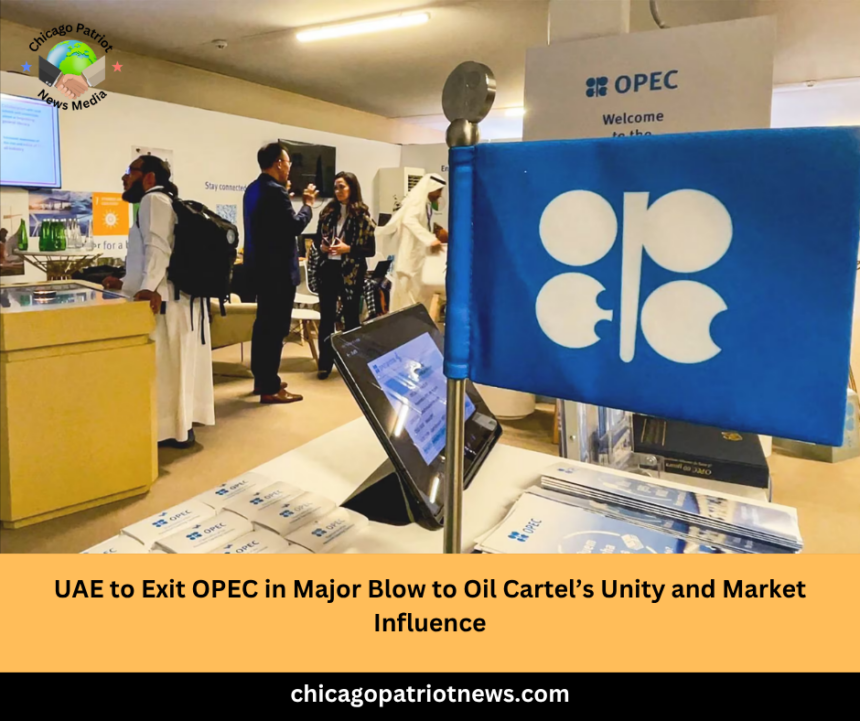
The United Arab Emirates has said it will leave OPEC effective May 1, a major move that strips the oil cartel of one of its biggest producers and weakens its leverage over global supply and prices. The decision also extends to OPEC+, underscoring a broader shift in Abu Dhabi’s energy strategy.
The UAE has long pushed for higher output quotas, arguing that current limits have restricted its ability to sell more crude despite major investments in production capacity. Analysts say the exit reflects both economic ambition and growing regional friction, including tensions with Saudi Arabia over oil policy and wider Middle East politics.
Officials said the country will continue to bring additional production to market in a gradual and measured way, aligned with demand and market conditions. While the move is unlikely to cause an immediate shock because oil flows are already constrained by the war in Iran and the closure of the Strait of Hormuz, experts say it could further weaken OPEC’s long-term ability to manage prices.