

Chicago – July 26, 2026
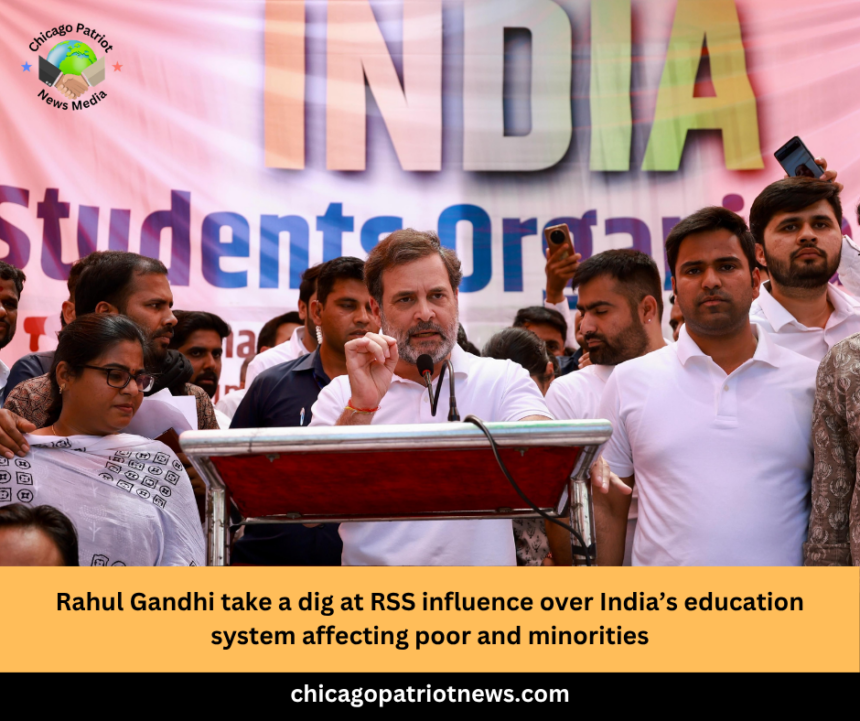
Rahul Gandhi has sharpened his attack on the BJP-RSS over India’s education system, arguing that Dharmendra Pradhan was only a “symbol” and that the deeper problem is the RSS’s influence over institutions.
Gandhi alleged that a BJP‑RSS nexus is prioritising loyalty over academic merit, installing vice-chancellors and professors chosen for their RSS links rather than expertise. He warned that if the RSS gains control of education, unemployment will rise and the country’s future will be “destroyed”.
Nearly one lakh government schools have shut over the past 12 years of Modi government, while around 43,000 private schools—many allegedly run by RSS‑affiliated organisations—have opened. These trends show a drive to privatise and weaken education, undermining opportunity for millions of young Indians.
India’s public education system is also under financial pressure. The 2024 budget cut UGC allocations by about 61%, reducing its grant to ₹2,500 crore and intensifying concerns about funding for universities and colleges. Critics say this squeeze forces institutions to rely more on fees, increasing the burden on students from Dalit, OBC and minority communities.
At the school level, recent government data and reporting show a long-term decline in public schools alongside expansion in private education, deepening worries about access and affordability. Education experts warn that these shifts, combined with weak faculty hiring and rising coaching dependence for exams like NEET, are worsening inequality.