

Chicago – February 15, 2026
Every February 14, Valentine’s Day lights up the world with hearts, roses, and sweet messages. But its story mixes wild ancient parties, a brave saint’s sacrifice, and today’s big romance celebrations. It blends faith, fun, and forever bonds.
Wild Start: Lupercalia Festival
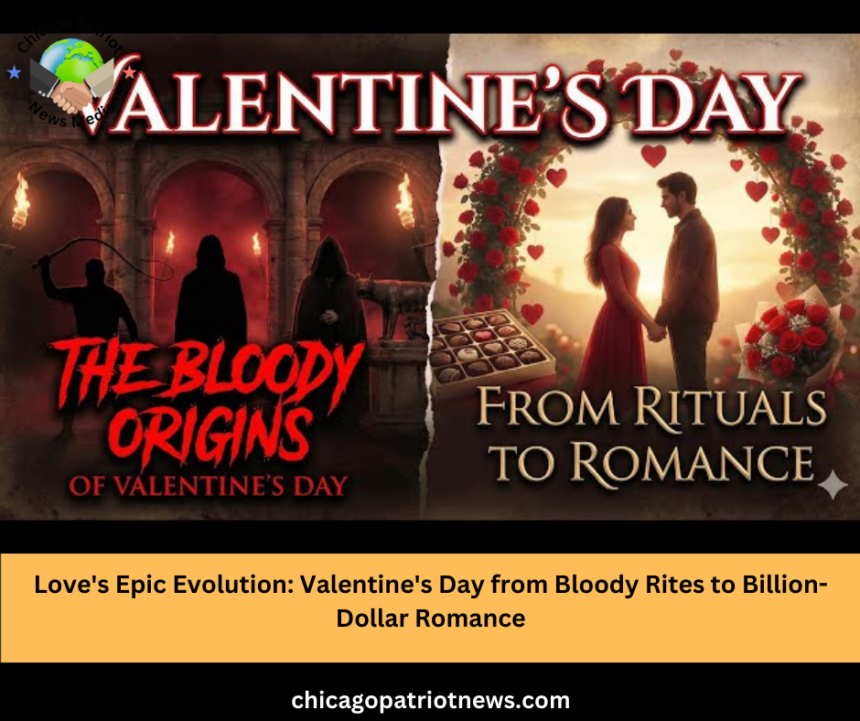
In ancient Rome, Lupercalia was a party for fertility gods like Lupercus and Faunus, plus wolf-raised twins Romulus and Remus. it was ceelbrated in mid-February. Priests killed goats and dogs in a cave. Then, nearly naked, they ran the streets. They whipped women with bloody hides to spark babies and welcome spring. Lotteries hooked up young folks—pure pagan fun!
Pope Gelasius I ended Lupercalia around 496 AD. He swapped in St. Valentine’s day to tame the wild vibes.
Hero Saint Valentine
St. Valentine was a 3rd-century priest, maybe from Rome or Terni. Emperor Claudius II (214-270 AD)—called “the Cruel”—banned soldiers from marrying. He thought single guys fought better. Valentine ignored him. He wed couples in secret and shared his faith.
Imprisoned, he healed his jailer’s blind daughter and signed a note “from your Valentine” before execution on February 14, 269 AD outside Rome’s Flaminian Gate—beaten, stoned, then beheaded amid Christian persecution.
Romance Blooms Worldwide
By the 14th century, Poet Geoffrey Chaucer linked it to birds mating, kicking off love poems and cards. Victorian times brought factory-made valentines, chocolates, and Cupid arrows.
Mass-produced cards, hearts, and chocolates boomed in 19th-century England and America. Now, billions pour into gifts and fowers for their loved ones.