

Chicago – July 12, 2026
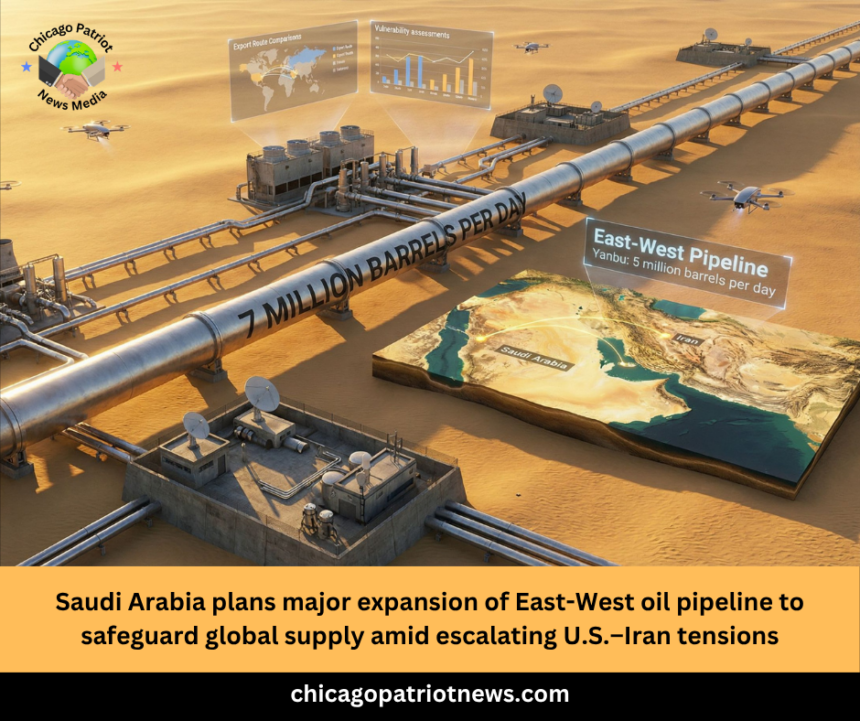
Saudi Arabia is advancing plans to expand the capacity of its East-West oil pipeline amid rising regional tensions linked to the ongoing United States–Iran conflict. The move comes as concerns grow over the security of global oil supplies, particularly through the Strait of Hormuz, a critical maritime route increasingly viewed as vulnerable.
The East-West pipeline transports crude oil from Saudi Arabia’s eastern oil fields to the Red Sea port of Yanbu, enabling exports to bypass the Gulf. Officials aim to increase its capacity to approximately 9 million barrels per day, strengthening the kingdom’s ability to maintain uninterrupted supply during potential disruptions.
Energy analysts view this development as strategically significant not only for Saudi Arabia but also for global markets, where stability in oil supply directly impacts prices and economic conditions. Any disruption in key shipping lanes could trigger sharp increases in energy costs worldwide.
By reinforcing alternative export routes, Saudi Arabia is positioning itself to mitigate geopolitical risks while ensuring long-term supply security. Markets and investors are closely monitoring the situation as regional dynamics continue to evolve.